Lighthouses and Submarine Telegraph Cables
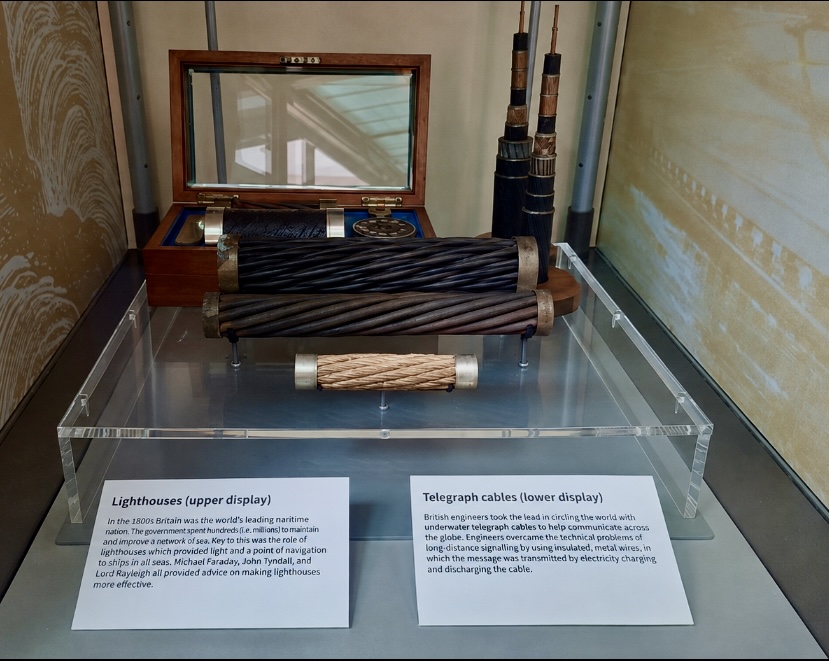
During the nineteenth century, Britain was one of the world’s leading maritime nations, making the development of safer and more efficient navigation a major priority. Lighthouses played a crucial role in guiding ships and preventing maritime accidents, and improving their lighting systems became an important field of scientific research. Scientists associated with the Royal Institution, including Michael Faraday, John Tyndall and Lord Rayleigh, contributed their expertise and provided scientific advice on how to make lighthouse illumination more effective.
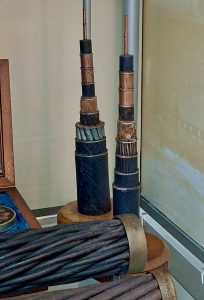
Another important technological development of the period was the introduction of submarine telegraph cables, which revolutionised long-distance communication. British engineers played a leading role in laying underwater cables across seas and oceans, making it possible to transmit messages between distant countries much faster than ever before. These cables consisted of insulated metal conductors that carried electrical signals across the seabed. However, transmitting signals over such long distances presented considerable technical challenges, requiring a deeper understanding of electricity and the behaviour of electrical currents. The scientific investigations carried out during this period, including Faraday’s fundamental work on electromagnetism, contributed to the scientific knowledge underlying these technological advances.