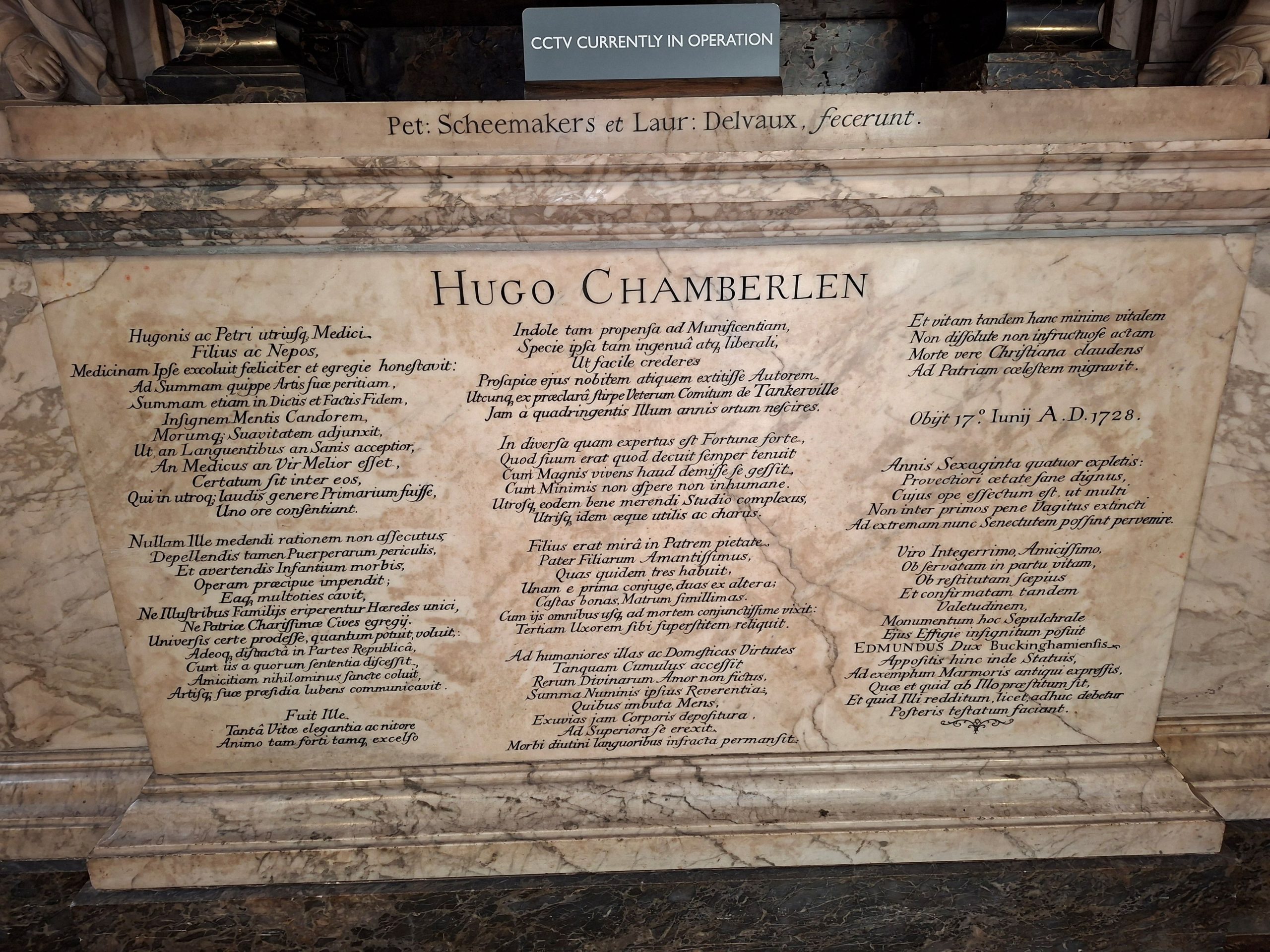
The mortal remains of Hugh Camberlen are preserved in this beautiful funeral monument in the north choir aisle of Westminster Abbey in London. The monument was erected in 1731 and is by sculptors Peter Scheemakers and Laurent Delvaux.
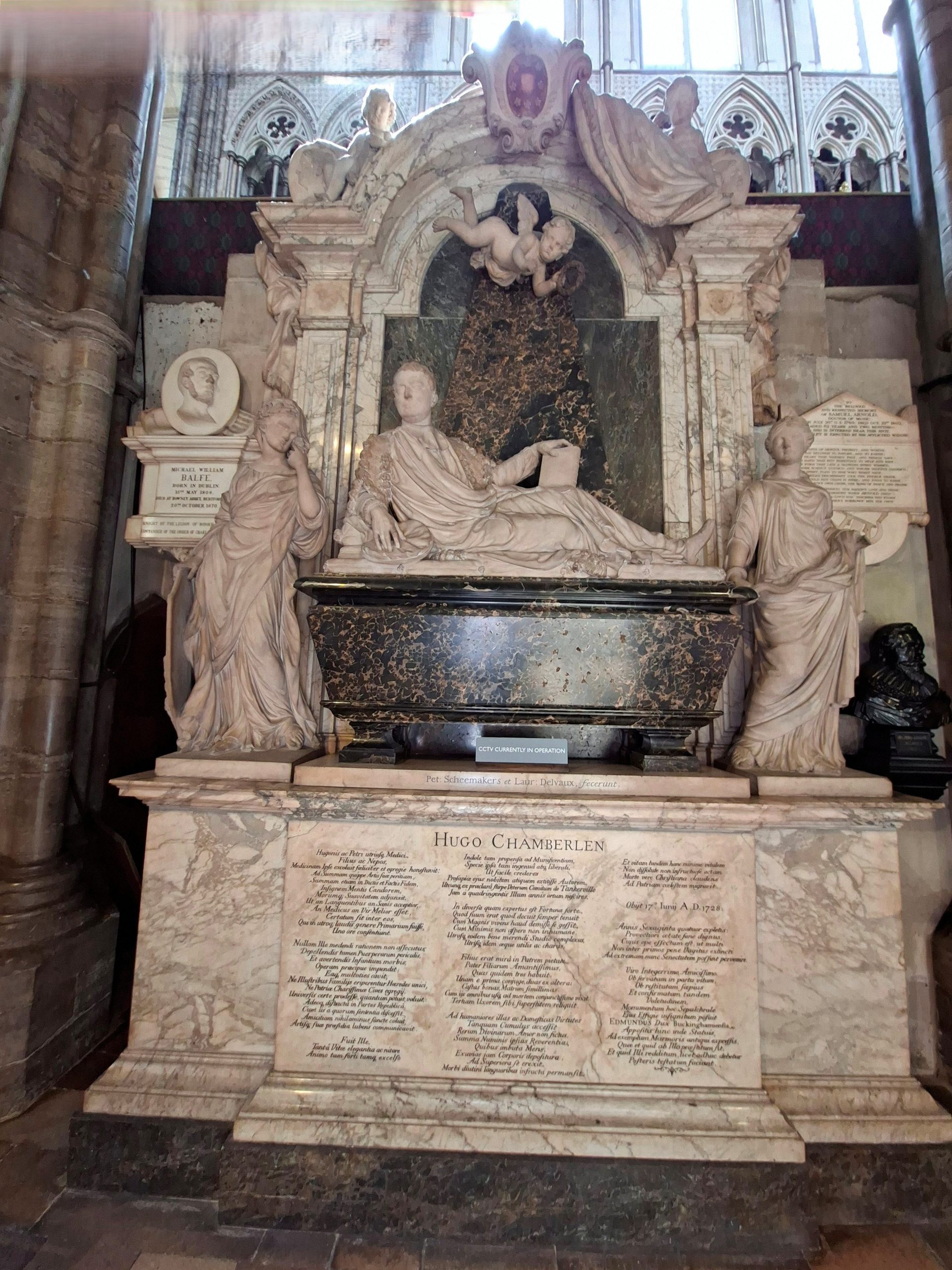
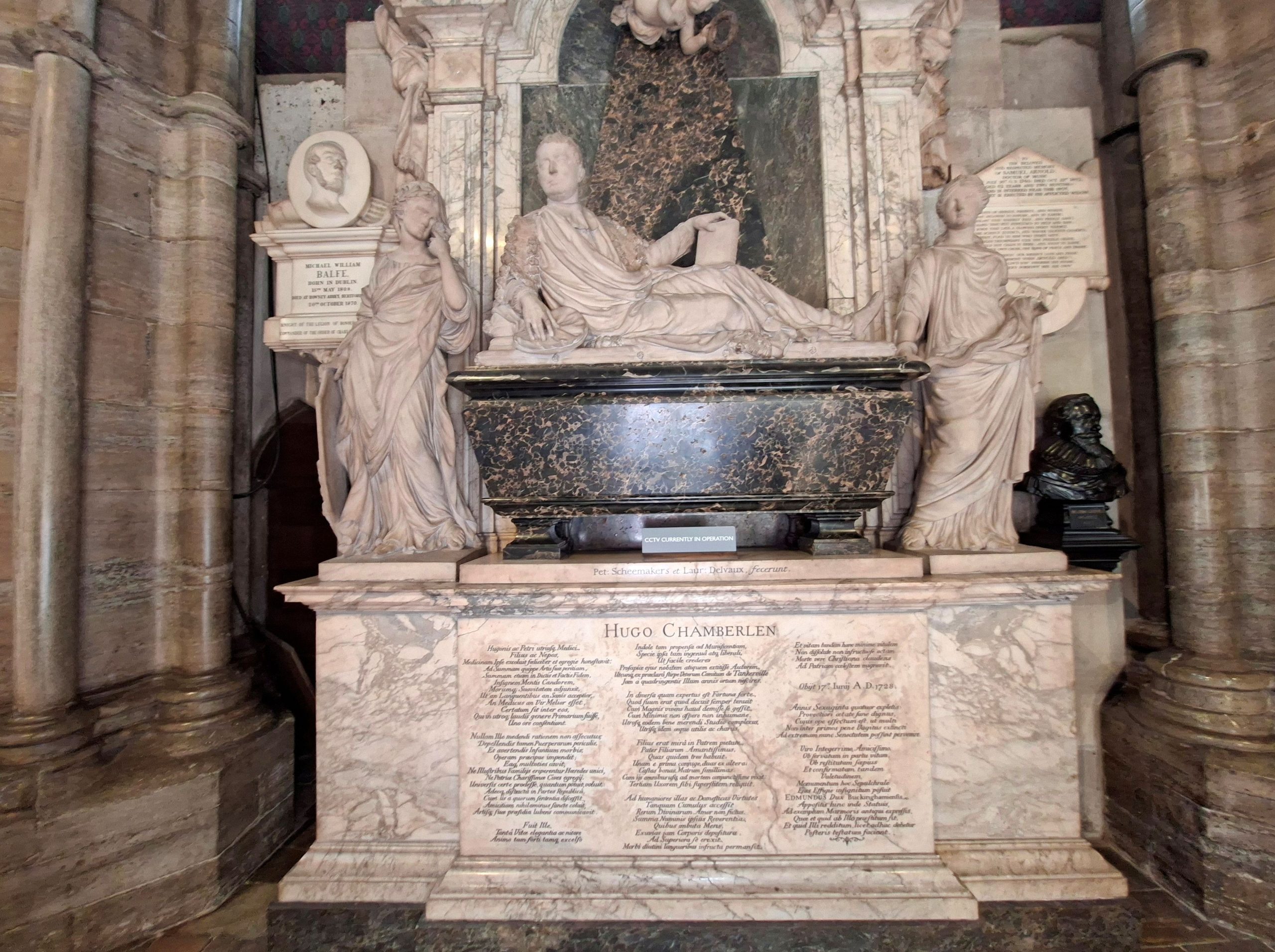
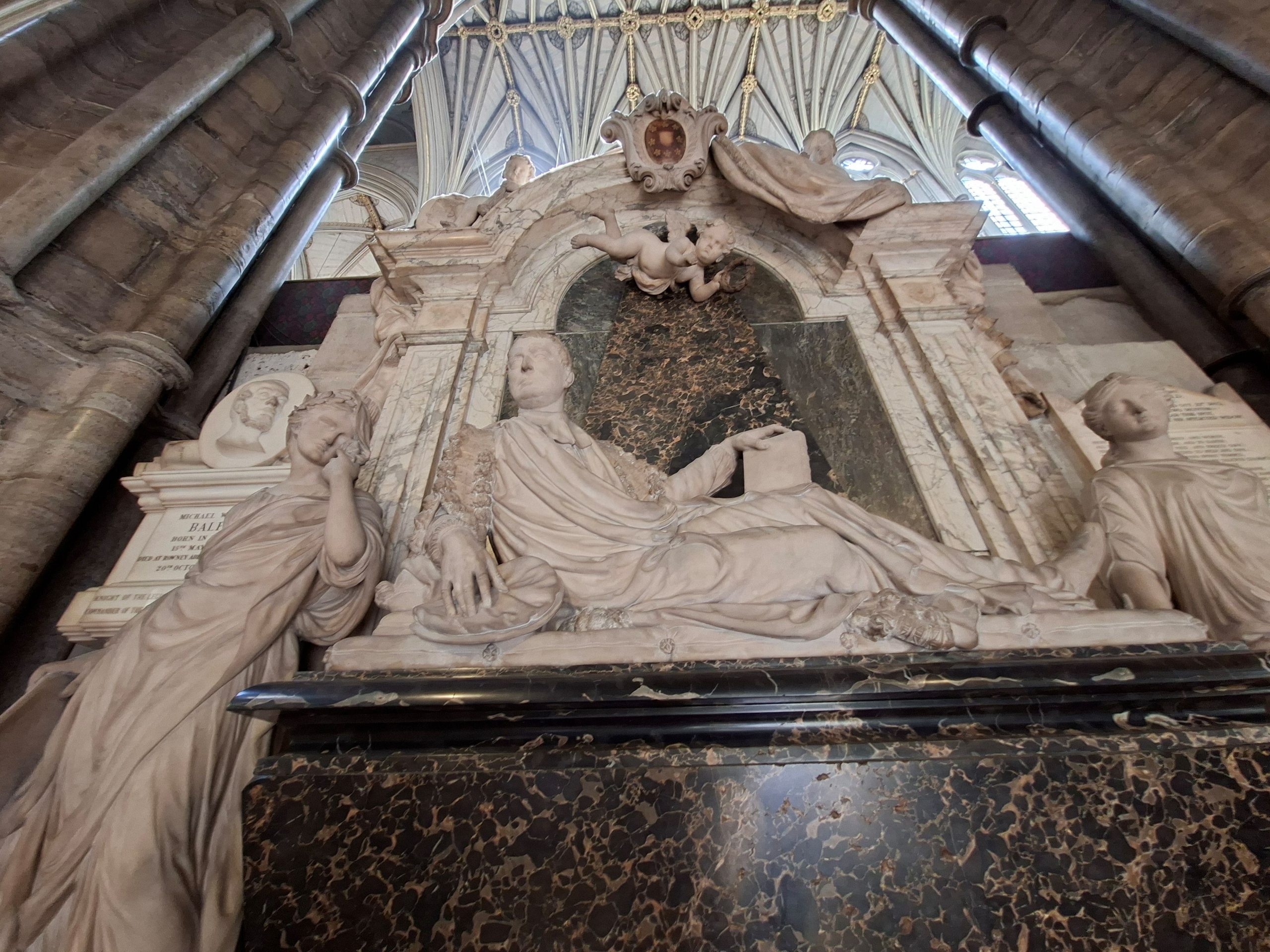
The Latin inscription was written by the Dean of Westminster, Francis Atterbury.
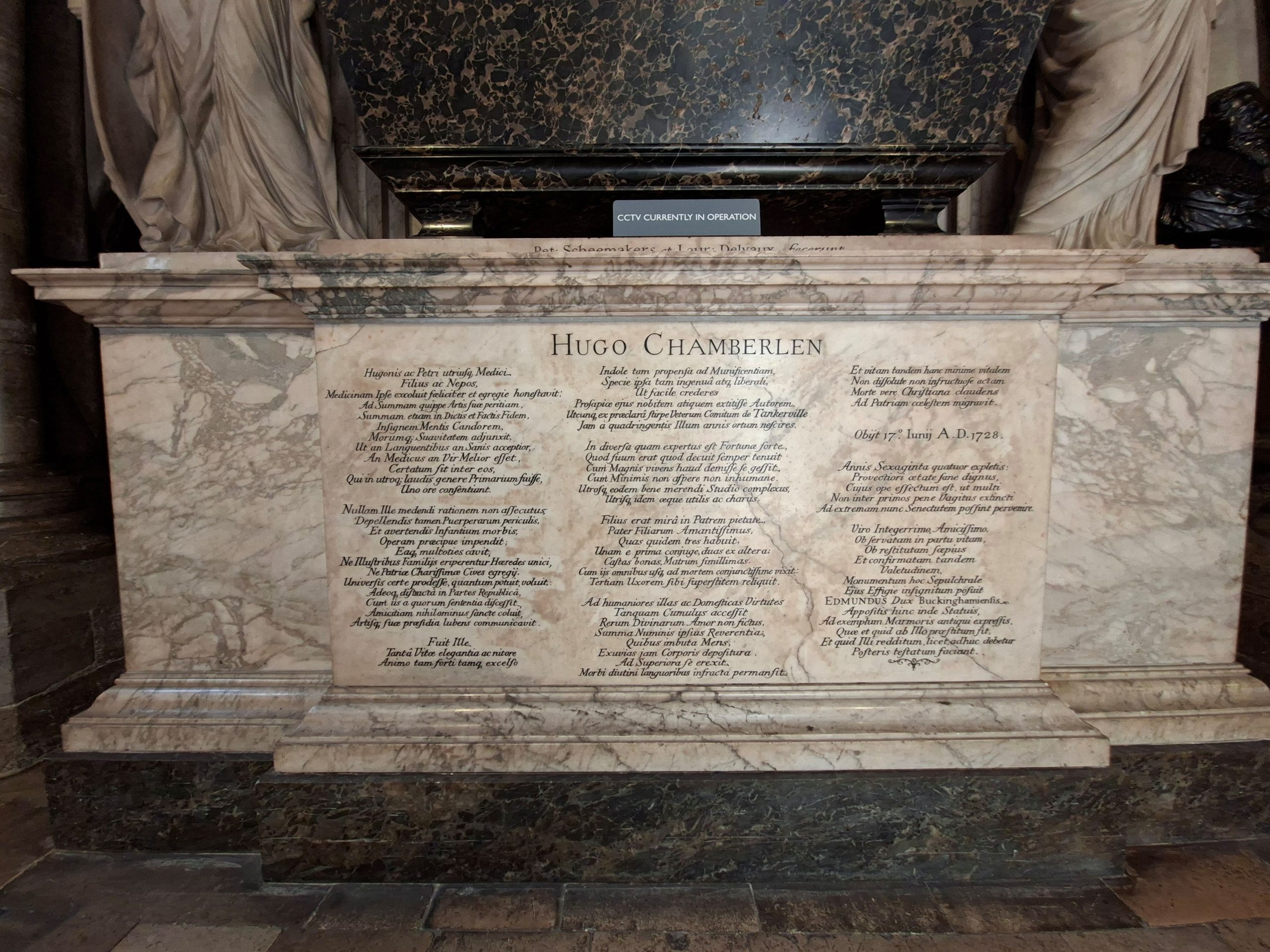
The English translation reads as follows:
“Hugh Chamberlen, the son and grandson of Hugh and Peter who were both physicians, happily cultivated medicine and peculiarly adorned the study; for to the highest skill in the art he joined the highest honour in word and deed, a singular integrity of mind, and amenity of manners; so that, whether he was more welcome to the sick or the sane, better as a man or a doctor, remains undetermined amongst those who agree with one voice that he stood foremost on either ground of praise. There was no method of recovery which he had not acquired; although he principally exerted his labours in repelling the dangers of fever, and averting the diseases of infancy. Thus he repeatedly saved their only heirs from being snatched away from illustrious families, and her eminent subjects from his dearest country. To benefit all as far as he was able was certainly his desire. Thus too, while the commonwealth was distracted by parties, he nevertheless cultivated a sacred friendship with those from whose opinions he departed, and willingly shared with them the protection of his art. He was a man of such elegance and brightness in life; such fortitude and elevation of mind; of a character so prone to munificence and a nature so ingenuous and liberal, that it had easily been supposed his race originated with a noble and ancient founder, although it were not known that he sprung from a remote branch of the Earls of Tankerville four hundred years old. Amidst the vicissitudes of life, what belonged to him, and became him, he always retained: living with the greatest, he never bore himself meanly; with the lowest never severely, never inhumanely; but embracing both with the same desire to merit well, he was to both alike serviceable and dear. A son, his piety was admirable; a father, he was the most loving to his daughters, of whom he had three; one by his first and two by his second wife, chaste, good, and most like their mothers. With all these, he lived unto death in the closest union, he left a third wife his survivor. To those more humane and domestic virtues he brought accumulated no feigned love of all that is divine and the greatest reverence of the Deity, imbued with which, his spirit rose to higher things, while divesting itself of the spoils of humanity, and remained unbroken throughout the langour of long sickness. Closing at last, by a truly Christian death, a life the least mortal, and spent neither dissolutely nor fruitlessly, he emigrated to his heavenly country. He died on the 17th of June 1728 having completed his sixty-fourth year; surely meriting a more mature existence, as by his aid it was effected that many, preserved even in their first pulings, may yet attain the extreme of old age. In return for a life saved at his birth, for health restored, and at last confirmed, EDMUND DUKE OF BUCKINGHAM, placed this sepulchral monument, to a man the most spotless and friendly. Attached are statues, wrought after the expression of ancient marble, to attest to posterity, what he availed, and what, could it be rendered, remains due to him”[1].
- Photos by Luca Borghi @ (August 2026)
- Locate the item on this Google Map