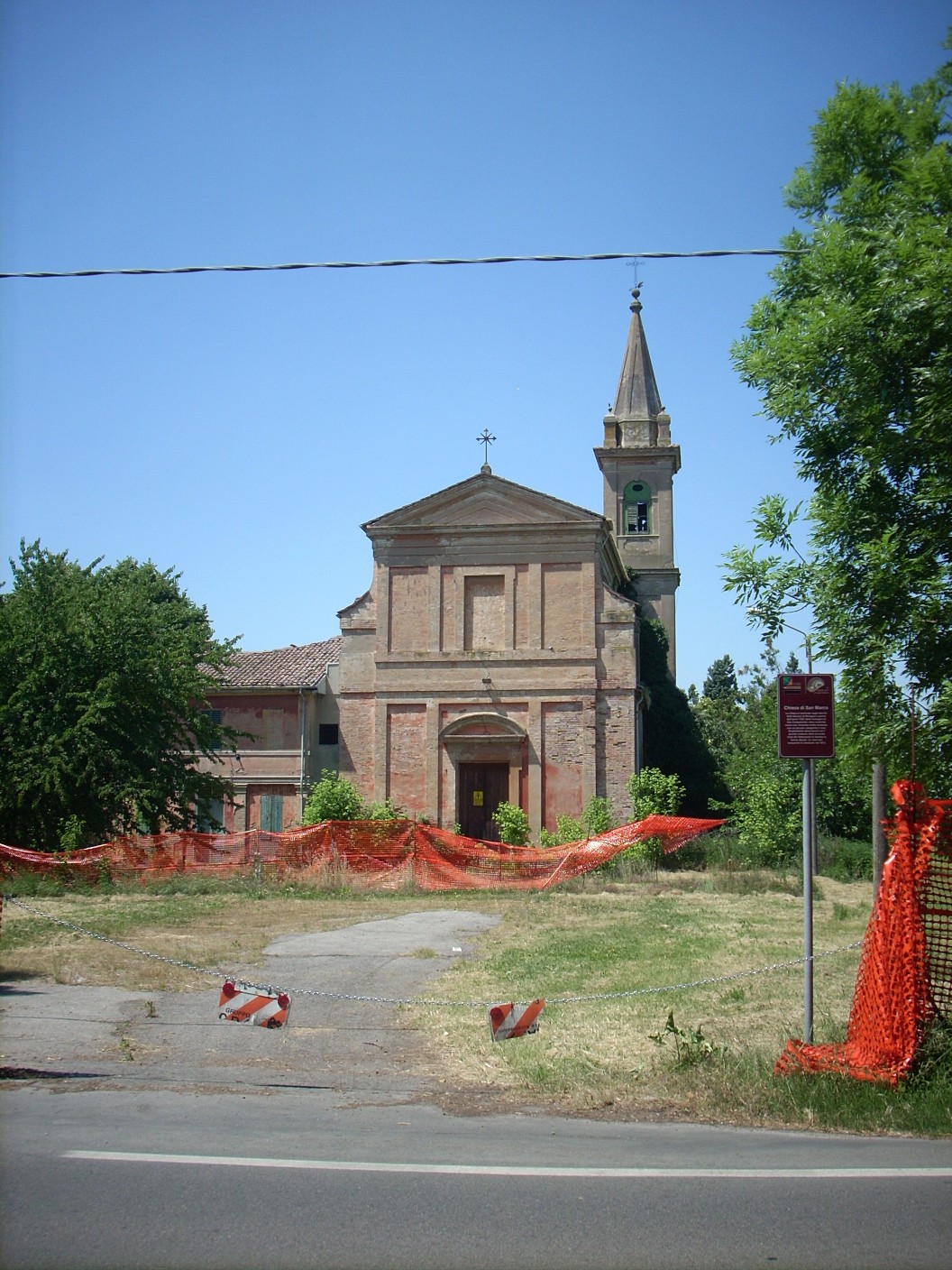
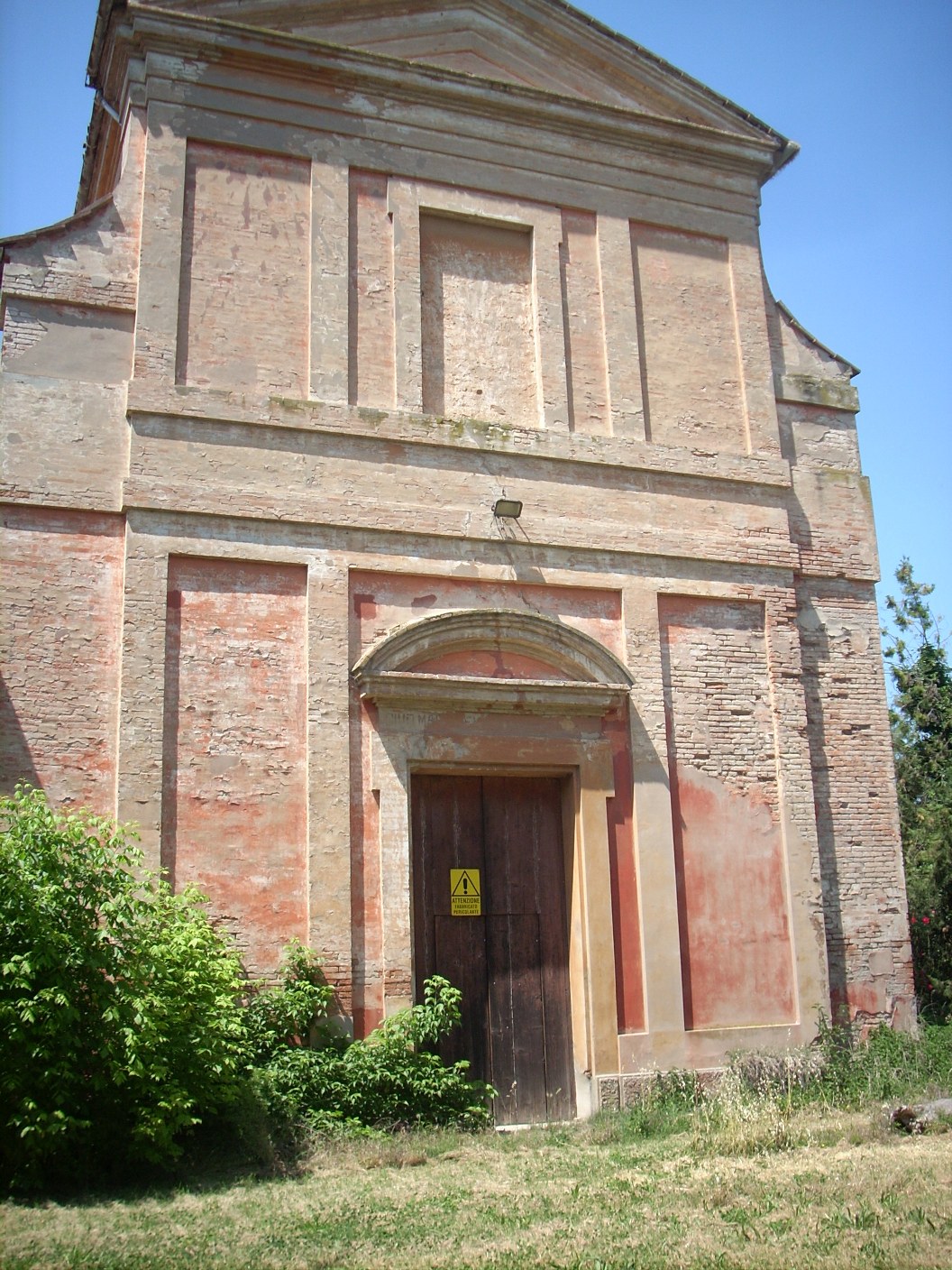
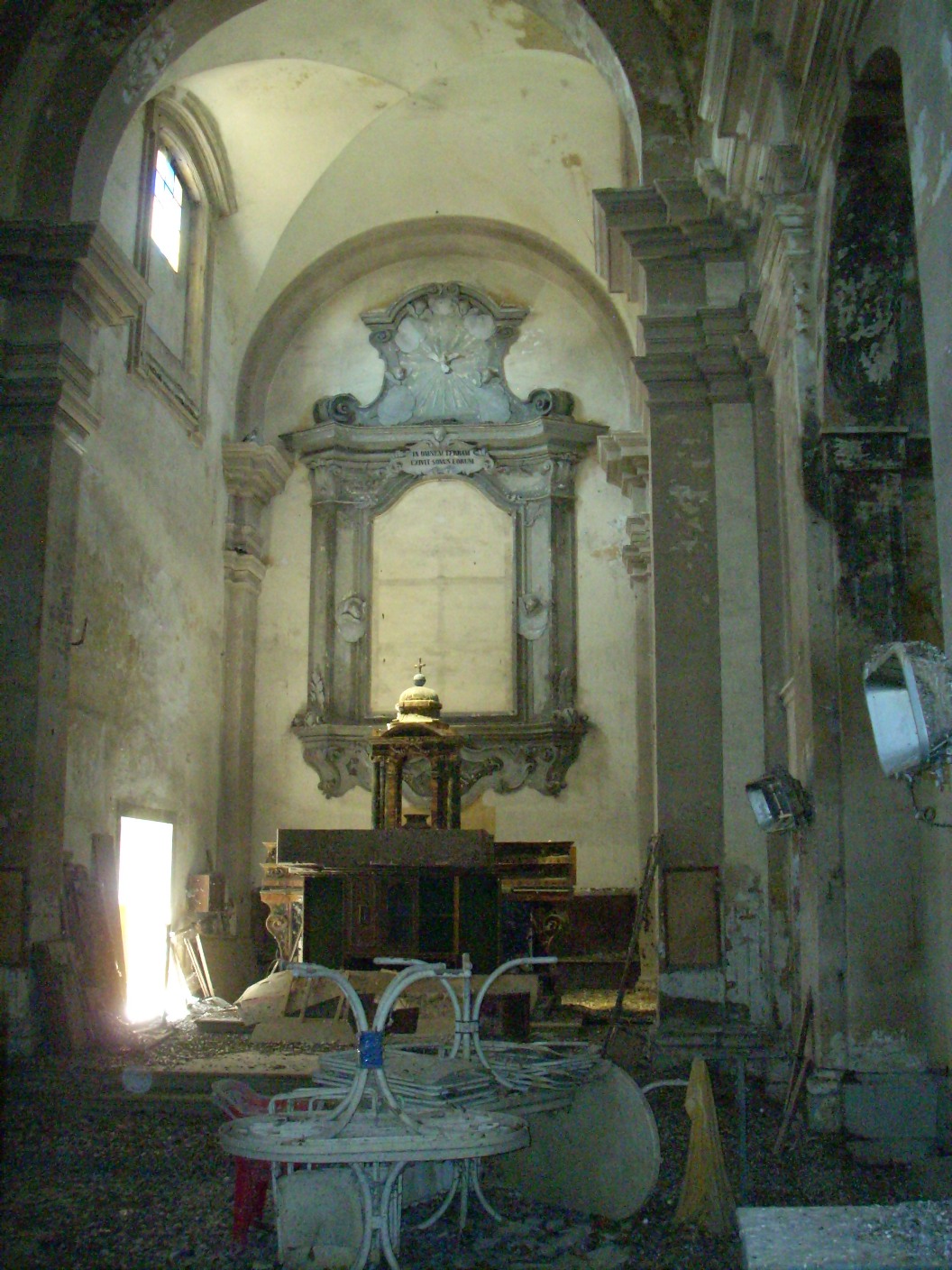
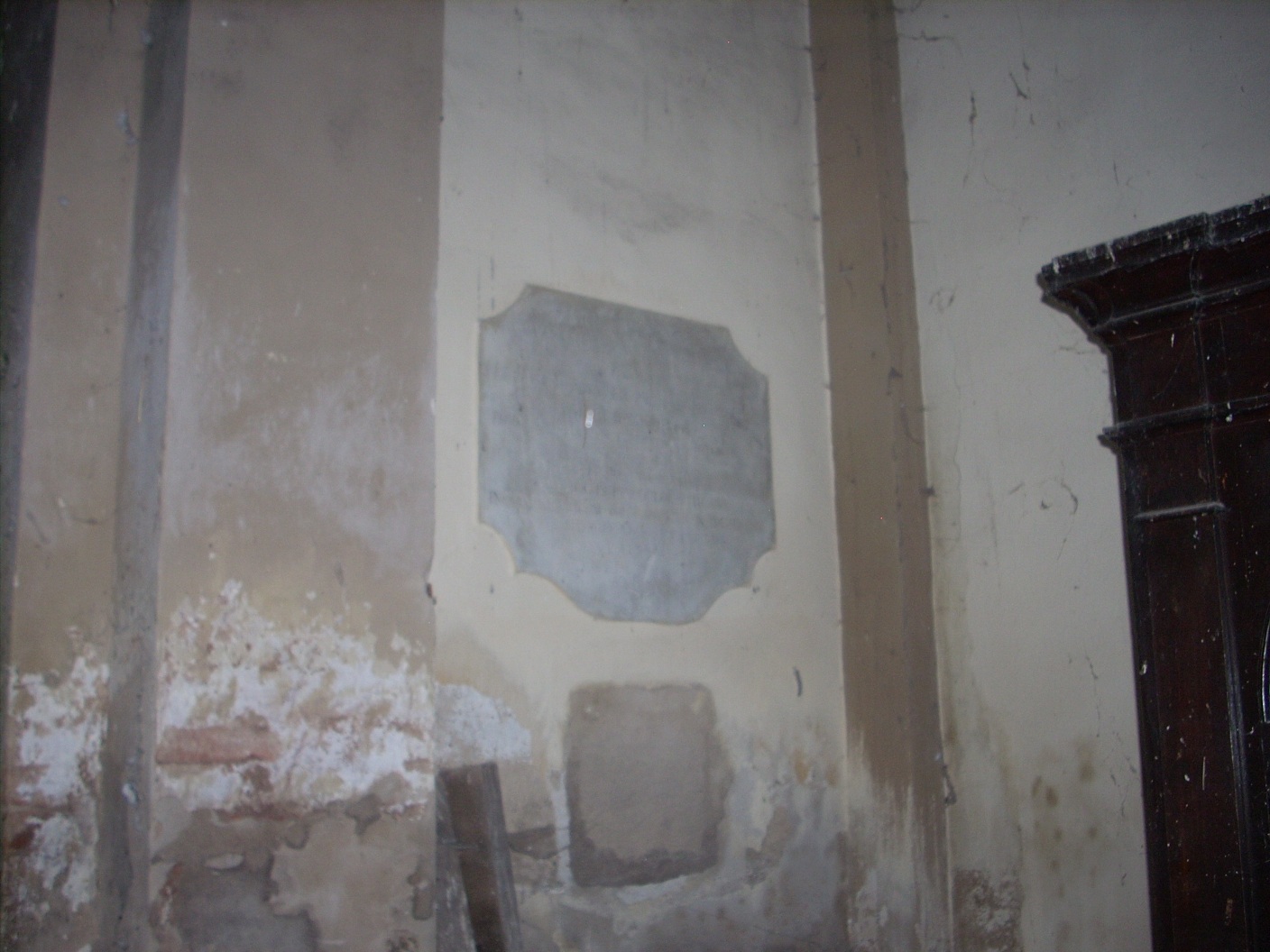
Inside the abandoned church of San Marco in the village of Vigorso di Budrio, near Bologna, an almost illegible marble tablet related to Antonio Maria Valsalva can be found in a right hand chapel.
The tablet remembers the last daughter of Valsalva, Maria Antonia, dead when she was just three years old, but makes also a reference to the fact that the great anatomist began his famous treatise De Aure Humana Tractatus while spending the holidays with his family in the surroundings: “MARIAE ANTONIAE / A. M. VALSALVAE ANAT. PRAESTANT. / FILIAE / ELENA LINIA MATER. PUELLAE DULCISSIMAE1/ V. A. III M. II D. VI H. XI / PAULUS ET SALESIUS VALERII ZANII COMITIS / V. CL FILIJ / PATERNAE ET SUAE CUM VALSALVA PATRE / QUI HOC IN PAGO OLIM RUSTICANS / INCOMPARABILIS AURIS ANATOMEN INCHOAVIT / CONSTANTISSIMAE NECESSITUDINIS MEMORES / L. D. L. M. / A. D. CIƆ IƆ CC XXV”2.
According to the historian Leonardo Arrighi, Valsalva was a frequent guest at the villa of the Counts of Zani (now Villa San Marco), situated directly opposite the church, and this was precisely during the years when he was writing the De Aure Humana Tractatus (c. 1690–1700). The decision to place a commemorative plaque nearby, therefore, “is likely a reflection of a desire to recall a place and certain periods spent in a spirit of serenity” (L. Arrighi, Appunti Budriesi, Carta Bianca Editore, 2021, pp. 613–614)
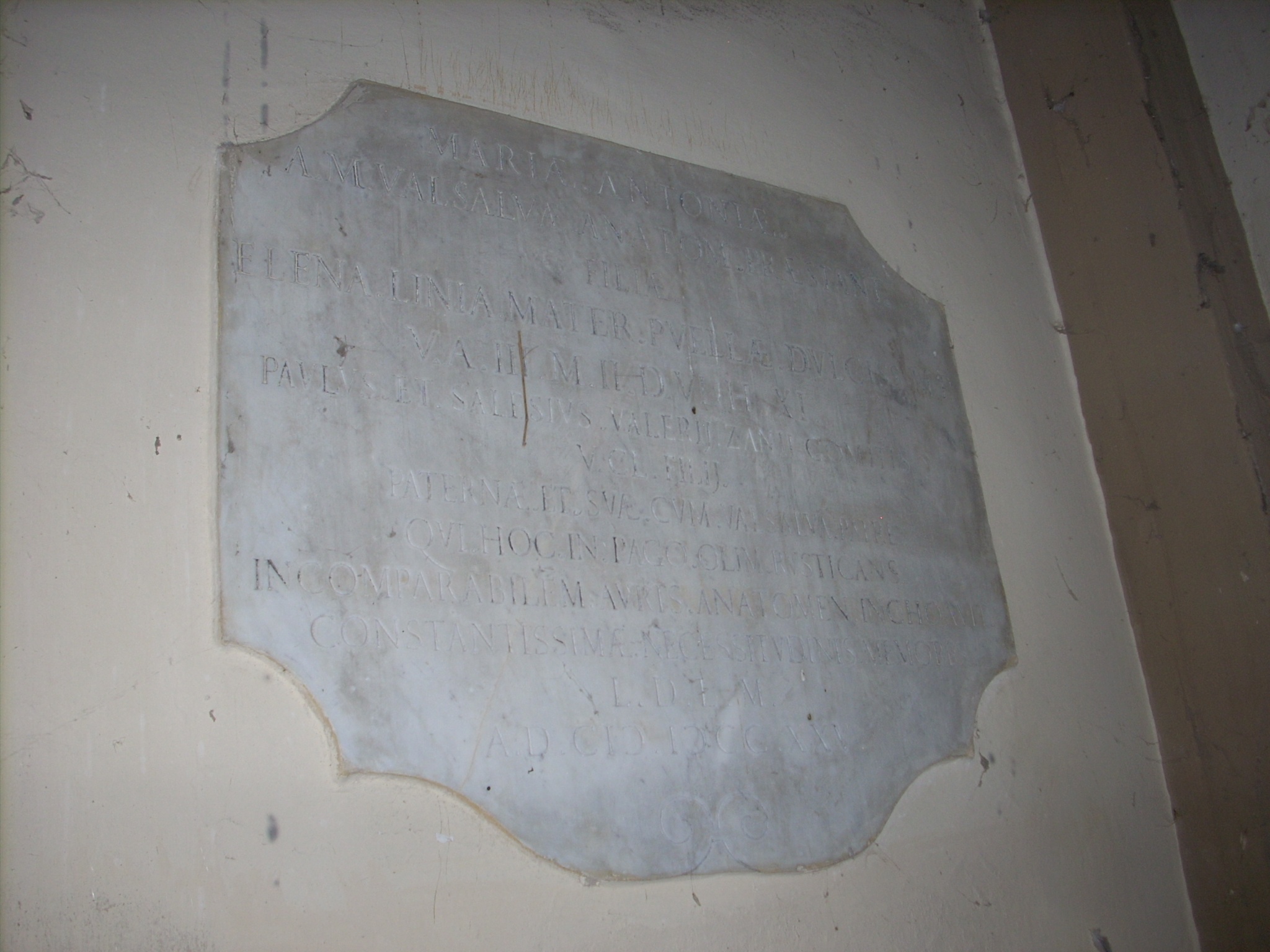
- Photos by Luca Borghi @ (May 2011)
- Locate the item on this Google Map
Bibliography
– Leonardo Arrighi, Appunti Budriesi, Carta Bianca Editore, 2021, pp. 613–614